

The world clock system is implemented on the Tecomat Foxtrot 2 platform using the CP‑2005 base module with an integrated LTE modem.
| Client | Město Praha |
|---|---|
| Published | April 15, 2026 |
| Category | Others |
| Tags |
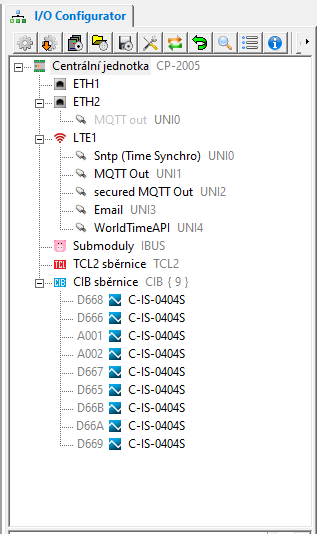
The implementation of the world clock system is based on the Tecomat Foxtrot 2 CP‑2005 PLC with an integrated LTE modem and on distributed C‑IS‑0404S modules connected via the CIB bus. The CP‑2005 base module provides 2× 100 Mb/s Ethernet, USB device and USB host, 1× CIB master, 1× TCL2 master, 6 universal AI/DI inputs, 6 relay outputs, and 2 analog outputs. The C‑IS‑0404S embedded modules add 4× AI/DI and 4× DO; their outputs can also be paired to operate as H‑bridges for controlled polarity switching.
The CIB bus is a two‑wire system with free topology, providing both communication and power over the same pair of conductors, and allowing up to 32 peripherals to be connected on a single branch. This architecture is advantageous for a clock system because it enables actuators to be placed close to individual dials while maintaining compact central control.
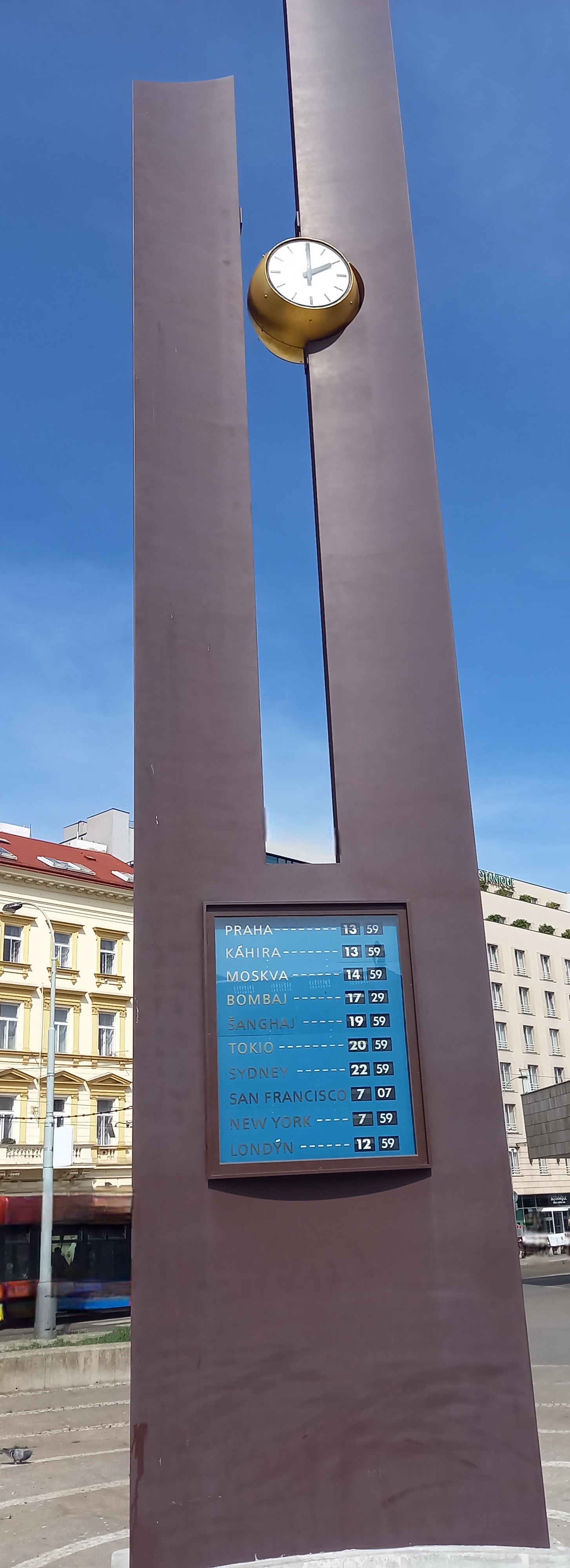
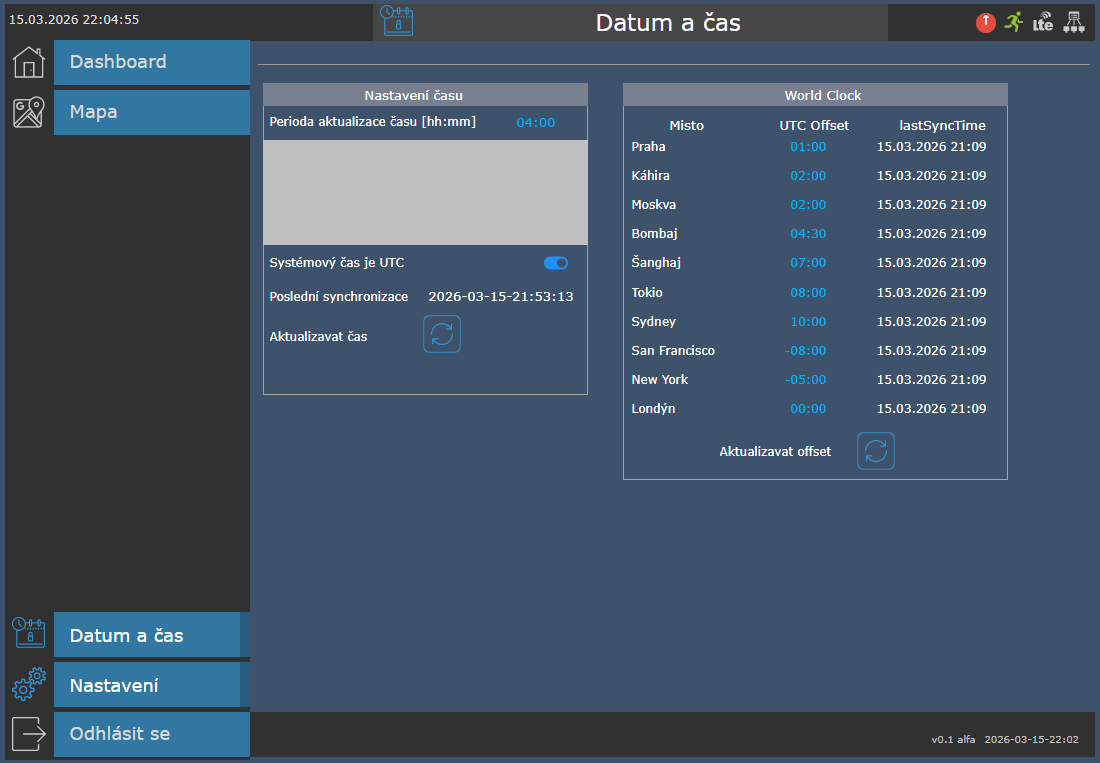
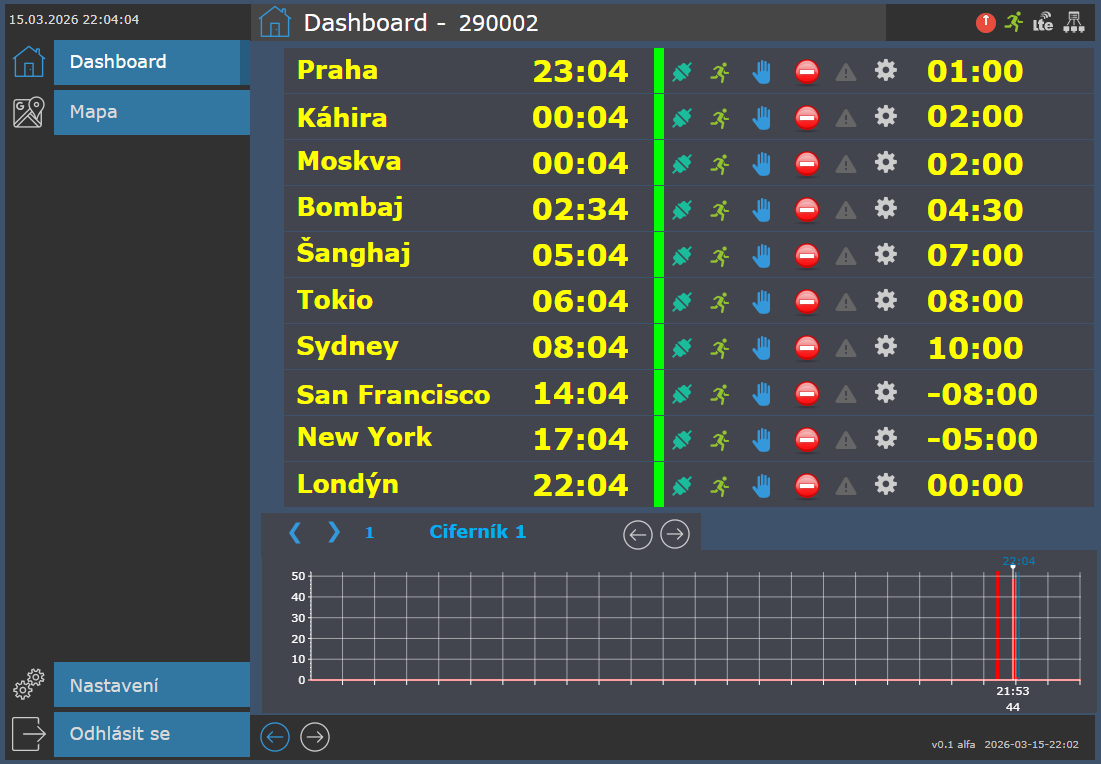
The system controls a pair of classic analog clocks with hour and minute hands, as well as flip‑type 24‑hour displays showing the time in selected world locations. The PLC provides central time synchronization, regularly updates the time offsets of individual destinations, and automatically accounts for daylight‑saving changes within the application logic. This ensures that all displayed times remain correct without any manual intervention.
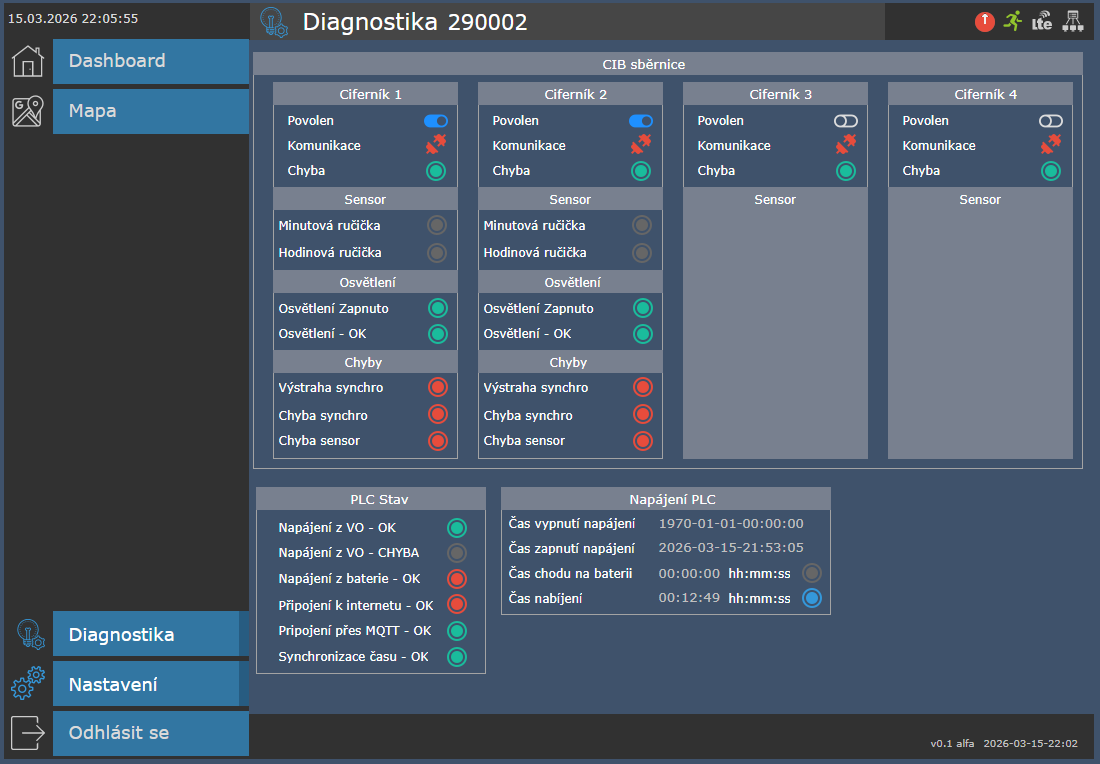
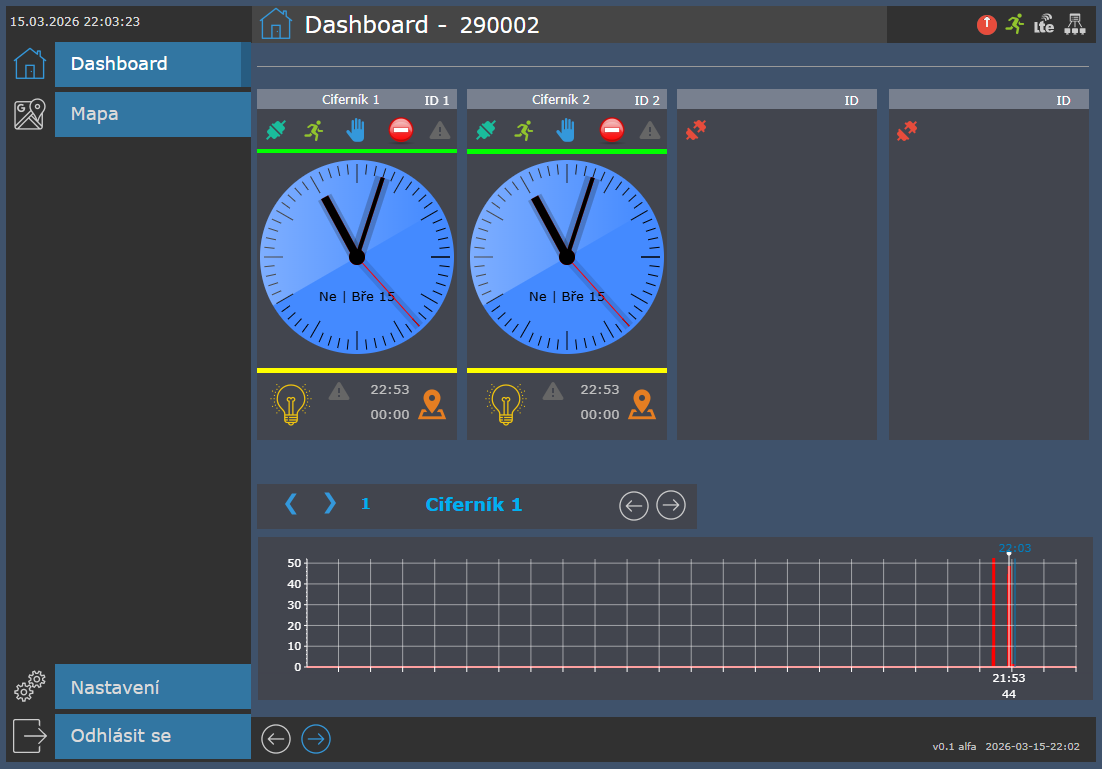
A major advantage of the Foxtrot platform is that visualization runs directly in the PLC. For this project, a web‑based visualization created in the WebMaker tool is used; WebMaker is designed for developing web pages for Tecomat systems with an integrated web server. Foxtrot 2 includes a built‑in web server, supports HTTP and HTTPS, web API, REST API, and access to selected variables through a web interface. This allows operators to monitor the dashboard, diagnostics of individual clocks, communication status, power supply, and time synchronization directly from a standard browser. For rendering the analog dials, the visualization uses an HTML5 canvas combined with the library component fbAnalogClockFlat.
Status and diagnostic information from the clocks is further transmitted to higher‑level systems via the MQTT protocol. Teco supports MQTT as a lightweight, communication‑efficient telemetry protocol suitable for IoT and remote data acquisition. In practice, this enables online publishing of dial statuses, fault messages, service information, and operational data to dispatching, monitoring, or cloud applications.
Remote service access is provided through the TecoRoute service, which enables secure PLC management over the internet without requiring a public IP address or additional hardware. The connection can be established both from the Mosaic development environment and from a standard web browser. This significantly simplifies diagnostics, service interventions, and application updates without the need for a technician to be physically present at the installation site.